 TAKE THEM SOUTH
I write mostly about the border I live on, down here in Kinney County where the fence line looks like somebody went at it with tin snips every weekend. But the northern border gets traffic too, and a case out of North Dakota this week is a good reminder that smuggling is a business, and businesses go where the security is thin.
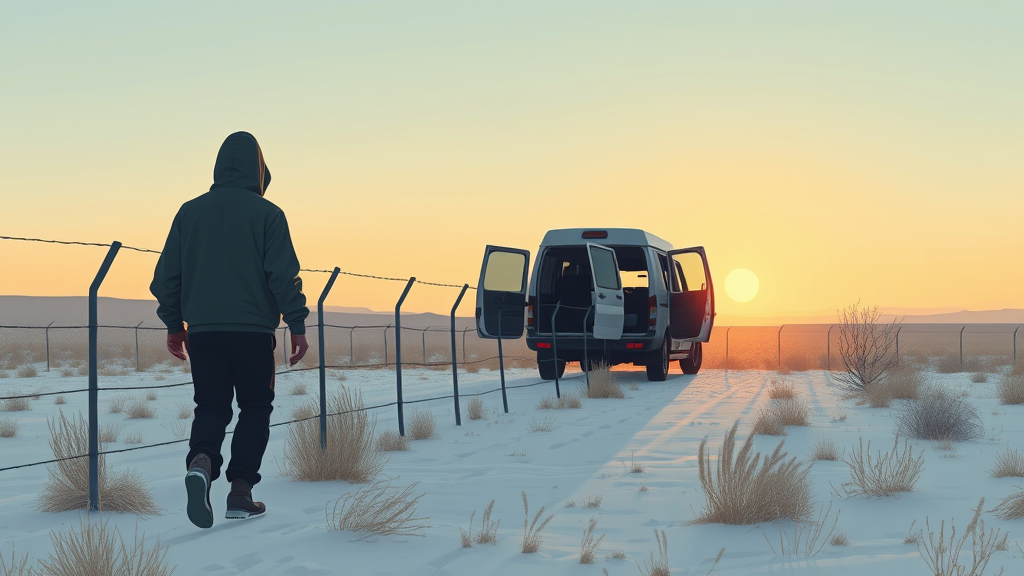
According to Valley News Live, two men from Louisiana are now charged with smuggling women who crossed the Canadian border into North Dakota on foot. Tourists who wandered off the wrong trail, these were not. Women picked up after an illegal crossing on foot, loaded into vehicles, and moved inland by men who drove a long way from Louisiana to do it.
Think about that drive for a second. Louisiana to North Dakota is about 1,500 miles depending on where you start. Nobody makes that trip twice on a lark. You make it because somebody's paying you, and because the route works. The northern border has stretches where you can walk across and nobody sees you for hours, sometimes days. Smugglers figured that out years ago. The cartels figured it out too, and they don't care which direction the compass points as long as the money clears.
Living on a smuggling corridor my whole life has taught me this much: the guys driving the load are the bottom of the ladder. They're replaceable, they usually get caught first, and the people who set up the trip are sitting somewhere comfortable counting the fees. Charging the drivers matters, don't get me wrong. Take enough drivers off the road and the business model starts leaking money. But until you go after the ones organizing it, you're bailing with a coffee can.
The details in this case matter for another reason. The people being moved were women. In my experience, when women get smuggled in groups like this, you're often looking at something worse than a job-crossing scheme. Sometimes it's straight-up trafficking. Sometimes it's debt bondage, where the crossing fee gets called in at rates nobody can pay legally. Federal investigators will sort out which one this is, and I hope they sort it out carefully, because the women in these cases are usually victims twice over: once by whoever put them on the trail, and again by whoever's waiting at the end of it.
I've found groups crossing my land at dawn. I've called in stash houses. And I can tell you the thing that surprises people from outside the border counties the most: how ordinary the logistics look. A rented SUV. A phone with a map pin. A guy from a thousand miles away who's never seen the river but knows exactly which culvert to wait by. Smuggling quit being some cowboy operation a long time ago. It's dispatch work now, a delivery service with worse cargo.
So when you read that two men from Louisiana got caught up near the Canadian line, understand what you're reading. That's one link in a chain that runs from whoever recruited those women all the way to wherever they were headed. The feds cut one link. Good. Cut the rest.
The next time somebody tells you the northern border is too cold and too empty to be a problem, remember that cold and empty is exactly what a smuggler orders off the menu.
Comments (12)
Log in or sign up to join the conversation.