 TAKE THEM SOUTH
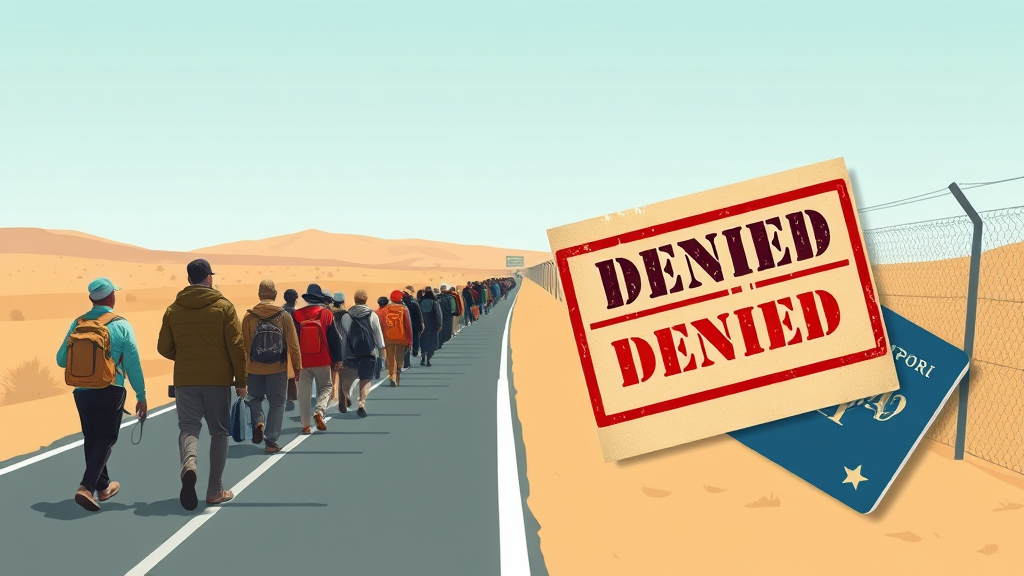
The State Department just put more than 15 people on its visa restricted list, all of them accused of organizing migrant caravans. The move comes with a warning strapped to it: anybody who joins an organized caravan can get denied a visa or have one they already hold yanked. MSN has the report here.
I've watched these caravans work for years. They don't sprout out of the ground like bluebonnets. Somebody puts them together. Somebody buys the buses, prints the flyers, runs the WhatsApp groups, and tells people exactly where to stage and when to move. The folks who do that organizing don't walk a thousand miles in bad shoes. They sit in offices and count money while other people's kids blister their feet on a Mexican highway shoulder. Anything that puts a cost on that organizing is fine by me.
That's what visa restrictions actually do here. A caravan organizer in Guatemala or Honduras who's been riding the gravy train doesn't care much about a speech in Washington. He cares plenty about his own ability to get a US visa, fly to Houston, visit his cousin, do his shopping. Take that away and suddenly the business isn't cost-free anymore. For my money it's the first punishment in a long while that lands on the people running the operation instead of the people being used as freight, and I've been waiting on that for a while.
The warning to participants matters too. For a long time, joining a caravan carried no downside at all. You showed up, you got processed, you got a court date far enough out that odds were you never saw the inside of a courtroom. When the rules say your caravan participation can kill your visa chances before you even ask, the sales pitch these organizers make gets a lot weaker. That pitch is their whole product, and Washington just put a defect in it.
Crossings are way down, and I'll keep saying I'm glad about it because I lived the other numbers and they were ugly. But low numbers don't mean the machine is gone. The cartels and the NGO-adjacent outfits that move people north are businesses, and businesses don't shut down because one quarter went bad. They wait. They reroute. They test the fence at mile marker whatever to see who's watching. Pressure has to stay on every piece of the pipeline, and the organizers are a piece.
Now, fifteen visa restrictions won't end caravans by itself. These networks run deep and a lot of them don't especially want to visit the United States anyway; they want to send other people here. But it puts a mark on named individuals. It tells every mid-level organizer that his name can end up on a list, and it tells caravan recruits that signing up with the guy with the clipboard has a price attached. All of that is worth doing.
We'll see who actually stays on the list and who quietly comes off it after some embassy lunch. That part I don't trust yet. But the principle is right: go after the people running the operation, and quit treating the line of tired folks they talked into walking as the whole problem. I've been saying that since before it was popular, and it's nice to finally see somebody in Washington do it.
Comments (6)
Log in or sign up to join the conversation.