 TAKE THEM SOUTH
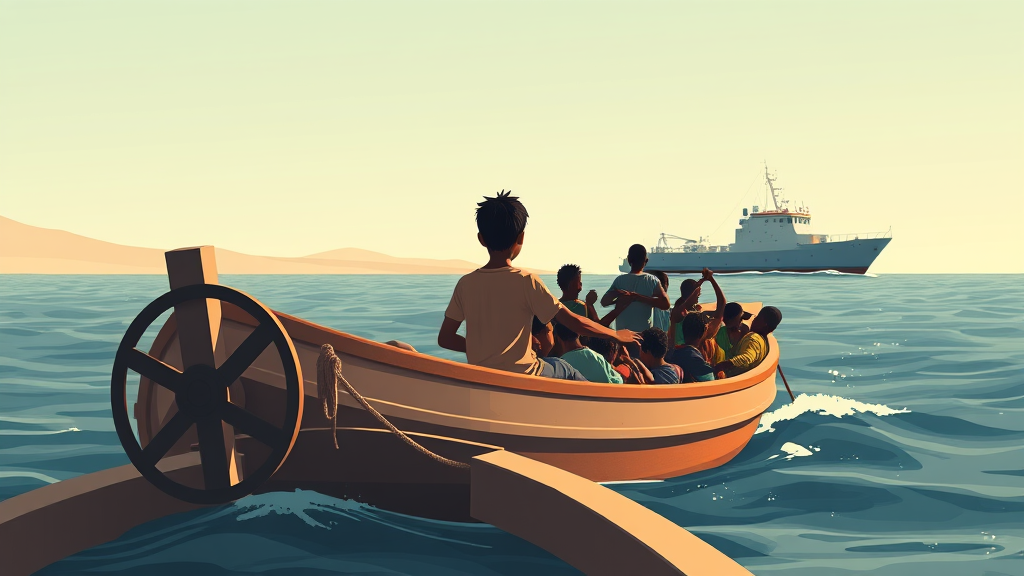
Greek coast guard officers boarded a migrant boat off Crete this week and arrested the person they say was driving it. The pilot was 13 years old.
The boy, reportedly from South Sudan, is accused of steering a small vessel carrying 34 migrants across the Mediterranean from Libya. The story comes from Kathimerini, and it tells you everything you need to know about how these smuggling routes actually run. This isn't a rescue story dressed up in humanitarian language. It's a business. And the people running it have no problem putting a seventh-grader behind the wheel.
I spent twelve years in Army military police and a stretch in private security after that. I've seen how adults hold up under pressure, at checkpoints and everywhere else, and I'll tell you plainly: a 13-year-old has no business operating anything on open water. The smugglers know this. They also know that if the boat gets picked up, a child at the helm is a legal shield. Greek prosecutors face an ugly choice when the "captain" is a minor, and the smuggling networks exploit that gap every single day.
This is a documented pattern, not a one-off. European authorities have flagged it for years: adults put minors in the driver's seat of these boats because kids face lighter processing, lighter penalties, and lighter scrutiny. The adult handlers stay in Libya, collect their money up front, and never set foot on the vessel. The kid takes all the risk. So do the 33 people packed in behind him.
Run the math on this crossing. Libya to Crete is one of the longest migrant routes in the Mediterranean, well over 200 miles of open water in a small boat. Thirty-four souls on a craft that size, with a child supposedly managing headings, fuel, and weather. If the sea had turned, nobody on that boat had the skills to save it. They made it to Greek waters on luck, not competence.
Credit where it's due: the Greek coast guard intercepted the vessel and made the arrest. They're the ones left holding a case that has no good outcome. A 13-year-old who was almost certainly coerced, or paid a reduced fare to steer, is now sitting in the Greek legal system. The actual organizers are untouched, a phone call away from loading the next boat with the next batch of desperate people and, if history is any guide, the next kid at the tiller.
That should make everyone angry, no matter where you sit on migration. The smuggling networks don't care about the migrants, they don't care about the kid, and they definitely don't care about the coast guard crews who pull bodies out of the water when a crossing goes wrong. Every dollar in their pocket comes from human misery, and they've figured out that children are cheap, expendable insurance.
You don't break this by wringing hands over the boy's arrest. You break it by going after the networks on the Libyan side with everything available: financial tracking, joint operations with Libyan authorities where possible, and real consequences for the adults who load these boats. Interdict the product and the business dies. Let the boats keep arriving and the business grows. That's not a theory. That's how every enforcement problem in history has worked.
A 13-year-old from South Sudan should be in school. Instead, smugglers made him a boat captain in the middle of the Mediterranean, and everyone downstream gets to deal with the wreckage. Call it what it is: child exploitation dressed up as a migration story. The Greeks caught the kid. Somebody needs to catch the men who put him there.
Comments (5)
Log in or sign up to join the conversation.