 TAKE THEM SOUTH
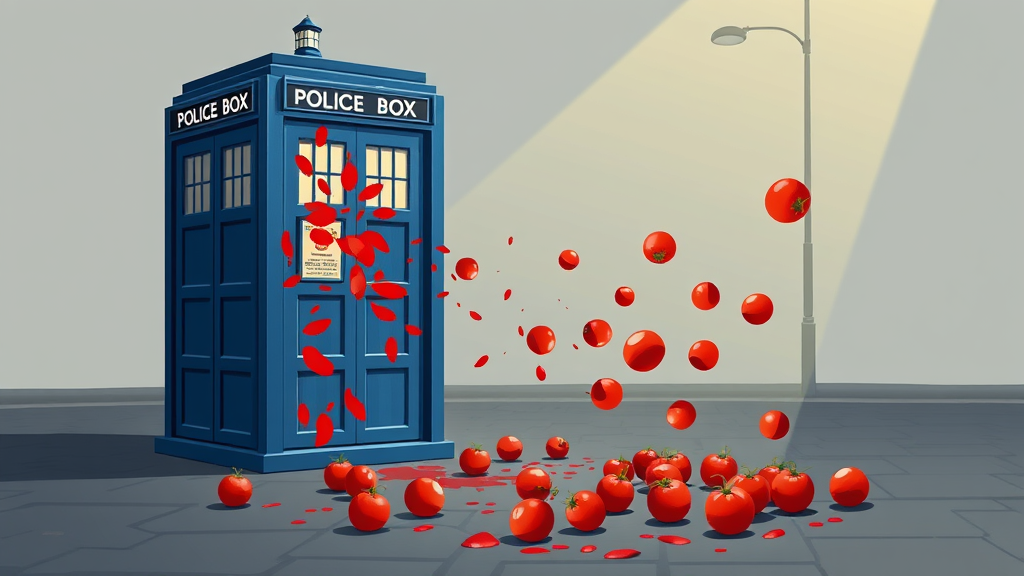
Every once in a while somebody in television says something sensible out loud, and the shock of it nearly knocks me off the sofa. Steven Moffat told The Australian this week that "there is no right to be protected from offence," and I had to read it twice to make sure a working TV writer had actually said it on the record.
Moffat, for those who spent the 2010s watching something else, ran Doctor Who and then Sherlock, two shows watched by half the planet and argued about by the other half. He knows exactly how fast a mob forms when a storyline doesn't go the way the internet decreed it should. This is a man who wrote Christmas specials that drew complaints from people who hadn't watched them, on both sides of every argument you can imagine. He's been in the blender. He's earned the right to talk about the settings.
And what he's saying is the oldest rule in show business, older than the studios, older than the Rex Theater where I saw Jaws in the summer of '75. When you put a story in front of an audience, some of that audience will hate it. That's the deal. That was always the deal. Spencer Tracy offended people. Shakespeare offended people, and he wrote for the groundlings with jokes that would get him marched into a sensitivity seminar before lunch today. Offence is what happens when art meets strangers. It's the price of the ticket, and it's a better price than the $18 they charge now.
What's changed isn't the audience. Audiences have always grumbled; my mother wrote a letter to the paper about a Mae West picture in 1940-something and considered it a civic duty. What's changed is that somewhere along the line, executives decided grumbling was a crisis, and the loudest grumblers became a steering committee. Writers started getting notes that had nothing to do with structure or character and everything to do with which groups the story might inconvenience. You can see the results at any multiplex. Careful movies. Curated movies. Movies built like legal briefs, and audiences staying home in numbers the trades can't spin fast enough.
Moffat's point cuts through all of it with one clean sentence. You don't have a right to walk through life unoffended. Neither do I. I've been offended by plenty, including half the remakes I've sat through this decade, and I handled it the traditional way: I complained to my husband in the car, and then I didn't buy a ticket to the sequel. Nobody needed to protect me. Nobody needed to cancel anybody. The market spoke, as it does, in that beautiful flat voice it has.
Now, I'll be fair to the man, which is a courtesy he isn't asking for. Moffat's own shows took their share of swings at the audience's patience, and Doctor Who under his watch wasn't above a sermon now and then. But he never pretended the audience owed him gratitude for it, and he never suggested the complainers should be escorted from the premises. In the current climate, a writer saying "let people be offended, it's fine" is practically a Profile in Courage, which tells you everything about how timid the business got.
The irony, of course, is that the fear of offence hasn't produced kindness or safety or even quiet. It's produced silence, then resentment, then flop after flop after flop, because audiences can smell fear through the screen. They always could. You can lecture people or you can entertain them, but the box office only pays for one of those, and it isn't the lecture.
So good for Moffat. A TV writer with a shelf full of hits stood up and said the thing every writer used to know before the notes departments got theology degrees. Nobody has a right to be protected from offence. What we have is a right to change the channel, walk out of the theater, and tell our friends the movie was terrible. I've built a whole career on that last one, and I intend to keep exercising it.
Comments (11)
Log in or sign up to join the conversation.