 TAKE THEM SOUTH
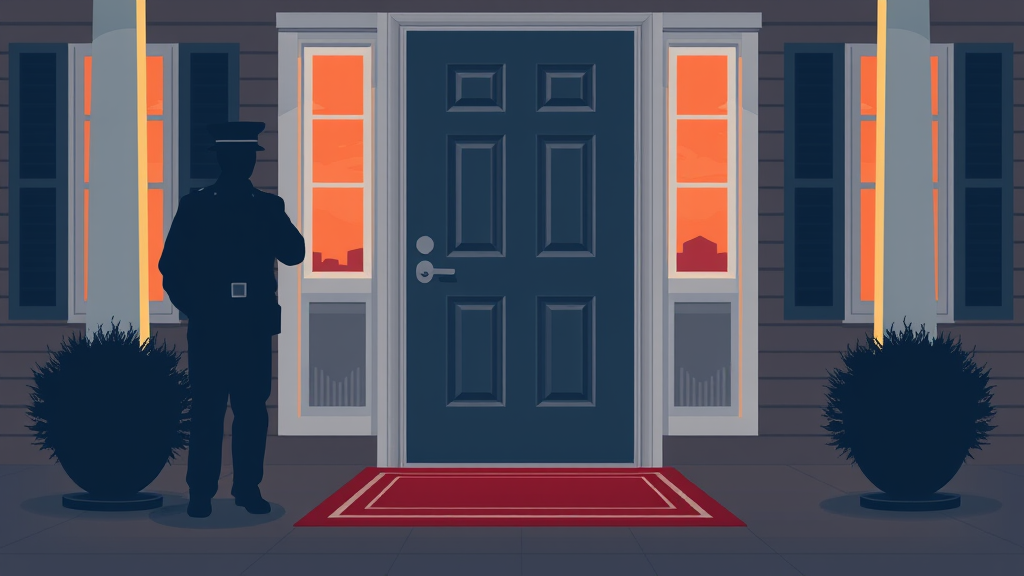

The Ninth Circuit Court of Appeals spent Thursday poking at one of ICE's most basic tools: the knock-and-talk. For anyone who doesn't know the term, and you should, a knock-and-talk is exactly what it sounds like. Agents walk up to a door, knock, and ask questions. No warrant. If the person inside opens the door and talks, agents can act on what they see and hear.
It's old-school police work. I did a couple decades of it in the Tucson sector. You knock, you talk, and half the time the guy hands you his own story. Now a three-judge panel wants to know whether the tactic is being used as a workaround to get inside homes without a warrant, and the government's lawyers took a beating for an hour.
The questioning got pointed. Judges on the panel pressed the Justice Department attorney on whether agents are coaching each other to angle for consent entries, whether interpreters are being used to stretch a consensual conversation into something longer, and whether a knock at 5 a.m. from four officers in ballistic vests can really be called voluntary at all. The government's answer was the standard one: the Fourth Amendment allows consensual encounters, and nothing about knocking on a door is a seizure.
That answer is legally correct and the panel knows it. The Supreme Court has said for decades that a knock and a question is not a search. What bothers the judges is the pattern. Cases stacked up in the Ninth Circuit involve agents who knocked, got a crack of the door, and ended up inside making arrests. Plaintiffs' attorneys argue the tactic has become a consent-extraction machine, especially in immigrant households where people open the door because they think they have to.
Here's the enforcement-side view, plainly. A warrant requirement for every front porch would end immigration enforcement as we know it. Agents would need probable cause and a signed paper for every contact, which means the fugitive population grows and the count shrinks. The people ICE is looking for in these cases are not random. They're aliens with final removal orders, criminal convictions, or both. Nobody's knocking on doors for fun at dawn.
But I ran crews and I know how tactics drift, so I'll say this too. A knock-and-talk only stays legal if it stays honest. The moment supervisors start treating consent as a formality, or agents start reading a cracked door as an invitation, courts pull the whole tool. That's how we lost high-speed chases earlier this year. Enough bad stops, and the restrictions arrive for everybody. The way to keep the tactic is to run it clean, document the consent, and accept the no when you get one.
The panel gave no indication of when it will rule. Whatever comes out will apply across nine western states, which covers a big chunk of ICE's interior enforcement footprint, including California, Washington, and Oregon. A ruling tightening the rules would slow operations overnight. A ruling for the government keeps the playbook intact.
The challengers want consent to mean real consent, with a genuinely closed door behind it. The government wants the flexibility agents have always had. My money says the court lands somewhere in between: tighter rules for early-morning operations and interpreter use, with the core tactic surviving.
Scoreboard for now: knock-and-talk, still legal. The Ninth Circuit is deciding how long that lasts.
Comments (0)
Log in or sign up to join the conversation.
No comments yet. Be the first.