 TAKE THEM SOUTH
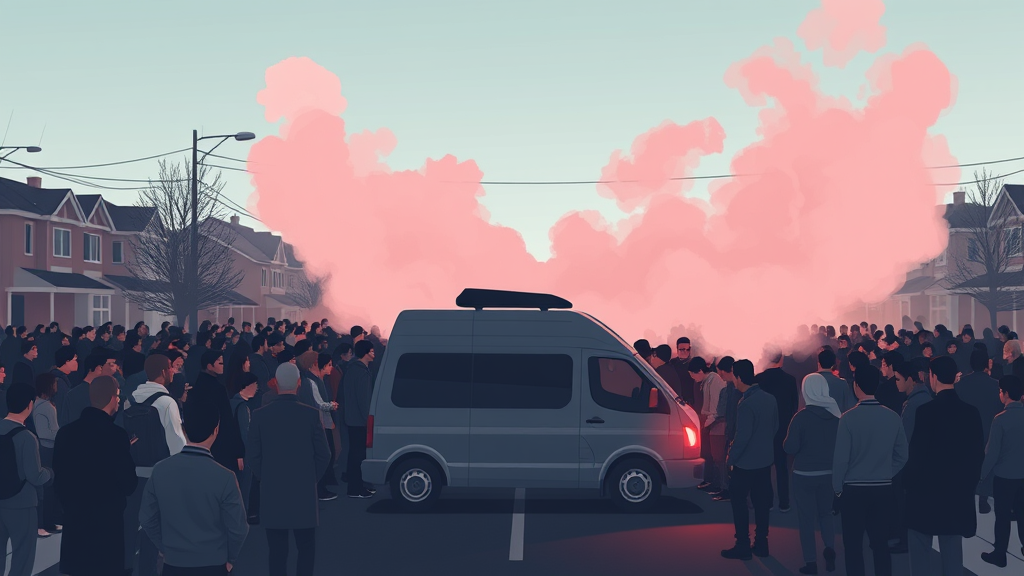

ICE has put out its account of what happened in Salem on Saturday, and it lines up with what anybody who has worked a street operation already assumed. Agents conducting an enforcement action were surrounded by about 30 people who threatened them, and officers used tear gas to clear the area and get out with their own skins intact.
The ICE statement describes a crowd closing in on officers during an enforcement action. The tear gas came after the threats, according to the agency. That order of events matters, and you can expect the people who weren't there to keep getting it backwards.
I spent 26 years in the Border Patrol, most of it out of Tucson. I watched crowds form around agents more times than I can count, and the pattern never changes. It starts with shouting. Then people inch in. Then somebody decides the officers are outnumbered twenty to one and gets brave. The job at that point is simple: control the space, get the target in the vehicle, and leave before somebody does something everybody regrets.
Tear gas is one of the tools for doing that. It's an exit, and a reliable one. In my experience, it doesn't break bones, it doesn't leave marks, and a street empties out fast when the canisters land. Anybody who has ever been around the stuff knows it's more unpleasant than dangerous. Agents breathing it themselves is routine; the canisters don't check badges.
Expect the usual crowd to frame this as heavy-handed. They always do. A mob corners federal officers, the officers respond with the least lethal option on their belt, and somehow the tear gas becomes the story instead of the 30 people who thought threatening cops was a winning move. I've read that script a hundred times. It wasn't convincing in 1998 and it isn't convincing now.
The critics never want to answer the obvious question. What's the alternative? An arrest team boxed in by a hostile crowd is supposed to do what, exactly? Ask nicely? Wait for the mob to vote on it? Every officer in that circle has a right to go home at the end of the shift, and the tools exist precisely for the moment when a crowd decides to test whether they'll get to.
The account from ICE is the account from ICE, and I'll note plainly that we're going off the agency's word on the details. Per the reporting out of Salem, agents deployed the gas, freed their vehicles, and left the area. Body camera footage and witness statements may fill in more later. But the core claim, that a crowd formed and officers cleared it with gas, is one of the most common and most believable scenarios in enforcement work. There is a reason every field office trains for it.
The larger lesson for the folks in Salem and every other city thinking about surrounding agents: it doesn't work. The officers still got out, and getting out was the objective once the crowd closed in. All the crowd bought itself was a bad afternoon of burning eyes and, for a few of the sharper participants, likely a felony charge. Interfering with a federal officer is a real statute with real teeth, and yes, you can be prosecuted for it even if you were just standing there screaming, if standing there screaming is what was blocking the officers.
The scoreboard from Saturday: one crowd dispersed, multiple vehicles freed, every officer out of the area. If somebody thinks that adds up to a win for the mob, they're reading a different box score than I am.
Comments (29)
Log in or sign up to join the conversation.